
The Ropen: Modern Pterosaur or Luminous Myth?
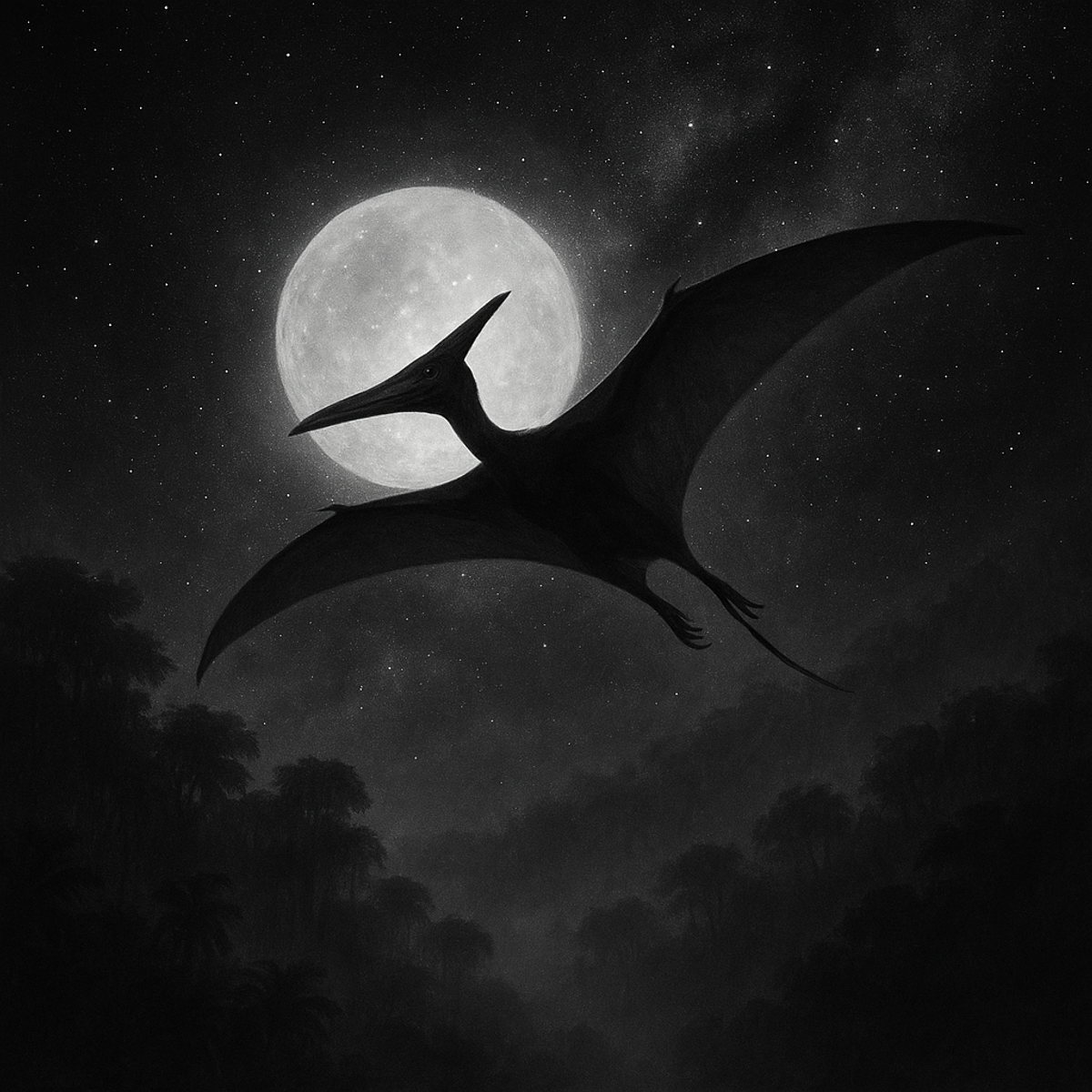
We explore the enigma of the Ropen from Papua New Guinea. Is it a surviving pterosaur or merely a natural phenomenon misinterpreted?
The Legend of the Ropen
The Ropen, a legendary creature that has captured the imagination in Papua New Guinea and beyond, is described as a large flying being shrouded in mystery. Island inhabitants often describe it as similar to prehistoric pterosaurs, with an impressive wingspan and a long tail.
In the most remote regions of this tropical forest, stories of Ropen sightings have endured through generations. Tales from elders and experienced hunters speak of its nocturnal flights and the lights that sometimes accompany it. These narratives have led to all sorts of speculations, from legends rooted in local culture to theories about the survival of prehistoric species.
Reported Sightings
Over the decades, reports of sightings of this creature have emerged from the jungle's depths. Witnesses claim to have seen a gigantic form cross the twilight sky, its wings slicing through the air with an inexplicable flapping. Some descriptions mention a bioluminescent light, a phenomenon that has puzzled both locals and researchers.
The stories from locals are not the only sources of these sightings. Adventurers and explorers have returned with detailed accounts of encounters with the Ropen, often accompanied by blurry photographs and circumstantial evidence that fuel interest. However, conclusive evidence remains elusive, leaving room for doubt and fascination.
Scientific Explanations
The Ropen phenomenon has also attracted the attention of the scientific community, which seeks to offer rational explanations for its existence. Some experts suggest that sightings may be misinterpretations of large birds, like the Flying Fox, a type of giant fruit bat inhabiting the region that could easily be mistaken for a prehistoric creature.
Another scientific hypothesis suggests that the lights seen could result from bioluminescent activity. Some insects and plants in the dense forest are known to emit light, especially under very specific conditions. This explanation provides a naturalistic angle to the phenomenon, demystifying part of the Ropen stories without completely discrediting the possibility of an undiscovered animal.
The Debate Between Science and Folklore
The mystery of the Ropen not only fascinates explorers of the unknown but also raises questions about how cultures interpret the inexplicable. In Papua New Guinea, where stories of spirits and mystical creatures are intertwined with traditions and beliefs, the Ropen holds a special place, being both a cautionary tale and a symbol of wonder.
This debate becomes a case study on the intersection of science with folklore, and how these stories are preserved and transformed in modern narratives. For some, the lights and shadows in the jungle represent more than mere natural phenomena; they are a reminder of the rich history and culture of these communities.
The Charm of the Ropen: An Unsolved Enigma
Despite the lack of conclusive evidence supporting the existence of a surviving pterosaur, the Ropen continues to capture the imagination of those who hear its stories. Its presence in local mythology grants it a certain immortality, and the enigma of its dancing lights keeps the conversation alive.
The fascination with the Ropen is a testament to the human capacity to wonder and speculate about the world around us. As with so many myths, the truth may lie somewhere between reality and imagination; what matters is the ongoing desire to explore and understand all that this Earth still has to reveal.

Free Birth Chart
Discover the sky that existed when you were born
We reconstruct the astronomical map of the moment of your birth with exact planetary positions and advanced interpretation.
Get your free chart