
The Mysteries of the Universe's Origin
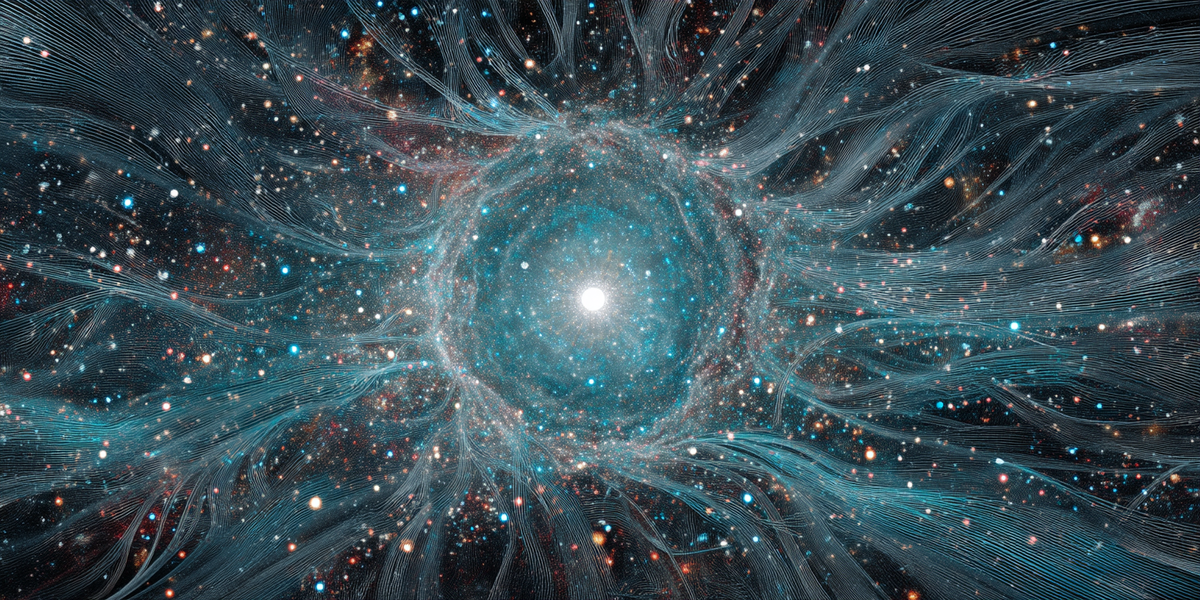
Explore the fascinating history of the universe's antiquity and theories suggesting the existence of universes before the Big Bang.
The Age of the Universe
Currently, it is estimated that the universe is approximately 13.8 billion years old. This figure comes from the analysis of cosmic background radiation, the observed expansion of galaxies, and current cosmological models. The cosmic background radiation is a persistent echo of the Big Bang, the event that marked the beginning of time as we know it.
The detailed observation of the universe through telescopes has allowed scientists to calculate its expansion, using data from space observatories and missions like the Hubble Space Telescope. This knowledge has been crucial in outlining the timeline from the zero moment of the Big Bang to our present.
The Big Bang: The Beginning of Time
The Big Bang is more than an explosion; it is the transition from an extremely dense and hot state to the continuous expansion we experience today. This crucial event led to the formation of subatomic particles and eventually light elements like hydrogen and helium.
As the universe expanded and cooled, gravity began to bind materials to form stars and galaxies, creating structures that became the focal point of a vast and intricate cosmos. Despite all we have learned, the Big Bang remains a phenomenon shrouded in mystery and unknowns.
Did Anything Exist Before the Big Bang?
The question of what preceded the Big Bang has intrigued philosophers and scientists for decades. Some theories suggest the existence of an eternal cycle of universes, where each Big Bang is followed by an expansion and eventual contraction into a Big Crunch, leading to a new Big Bang.
Other hypotheses propose that our universe is part of a multiverse, a vast ensemble of coexisting universes where the flow of time and physical laws may vary. However, these theories remain highly speculative and lack definitive empirical evidence.
The Concept of Time in Cosmology
In cosmology, time is a complex dimension, and its conception before the Big Bang challenges our conventional understanding. Stephen Hawking suggested that asking what happened before the Big Bang is like asking what is north of the North Pole: a question that makes no sense within our current understanding of space-time.
However, quantum physics and theories of space-time may still offer surprises. The notion of a 'before' the Big Bang could reside in hidden dimensions or energy states that our current theoretical framework cannot fully grasp.
Future Reflections on the Origin
As technology advances, we remain steadfast in the search for answers about the universe's origin and destiny. Future missions, such as those exploring gravitational waves or examining the distribution of dark matter, may provide crucial clues about the early moments of the universe.
The study of the universe is both a scientific and philosophical journey that invites us to contemplate our place in the cosmos. No matter how many mysteries we solve, there will always be more questions, driving us forward in this infinite stage of discovery.

Free Birth Chart
Discover the sky that existed when you were born
We reconstruct the astronomical map of the moment of your birth with exact planetary positions and advanced interpretation.
Get your free chart